
Exercises in unimaginativeness. Case study of GPT based translation and travesty of Alfred Jarry's “Ubu King”
Authors: Jan K. Argasiński, Piotr Marecki
Source attribution: Publisher HTML for DOI: 10.1145/3648188.3680252, cross-checked against the supplied ACM PDF.
Abstract
This paper investigates the application of large language models (LLMs), specifically GPT-4, in translating and transforming Alfred Jarry's avant-garde play Ubu Roi (Ubu King) through the lens of "uncreative writing." This concept involves repurposing existing texts to generate new forms of literary expression that challenge traditional notions of originality and authorship. We conducted a case study by first translating Ubu Roi from French to Polish using GPT-4. Subsequently, the translated text was reinterpreted into various genres and styles, showcasing the model's capability to navigate and creatively reshape classical literature. Generative Adversarial Networks (GANs), particularly Dall-E 3, were employed to produce illustrative content complementing these textual adaptations. This experiment highlights the transformative potential of AI in literature, emphasizing the convergence of digital technology and classical literary forms to generate novel insights and reinterpretations. The culmination of this project is the publication of a book that amalgamates these AI-driven reinterpretations, bridging the digital and analog realms.
CCS Concepts
• Applied computing → Language translation; Media arts;
Keywords
Keywords: translation, LLMs, uncreative writing, literary arts
ACM Reference Format
ACM Reference Format: Jan K. Argasiński and Piotr Marecki. 2024. Exercises in unimaginativeness. Case study of GPT based translation and travesty of Alfred Jarry's “Ubu King”. In 35th ACM Conference on Hypertext and Social Media (HT '24), September 10--13, 2024, Poznan, Poland. ACM, New York, NY, USA 5 Pages. https://doi.org/10.1145/3648188.3680252
1 INTRODUCTION
Alfred Jarry's Ubu Roi [5] (commonly translated as Ubu King) stands as a seminal work in the avant-garde tradition, marking a significant departure from conventional dramaturgy and narrative techniques of its time. Premiered in 1896, Ubu King is characterized by its grotesque satire and absurdist elements, challenging the norms of both language and theater. This paper explores a novel application of contemporary computational linguistics to this canonical text through a case study involving the GPT-4o large language model (LLM). We aim to demonstrate the utility of GPT-4o in translating and navigating Jarry's text within the framework of "uncreative writing," a concept that emphasizes the use of existing texts to create new literary forms devoid of traditional notions of originality and authorship. By leveraging the capabilities of GPT-4o, we analyze how such models can facilitate the reinterpretation of classic works in a manner that aligns with uncreative writing principles [4], thereby offering new insights into both the original text and the transformative potential of artificial intelligence in literature.
In "UBU GPT" Jarry's masterpiece is not treated as a sacred piece of literature that should be admired from a distance and paid tribute to, but rather as data that can be manipulated. This approach aligns with Kenneth Goldsmith's reflections on uncreative writing, viewing writing in the modern database-driven era as a practice where text is essentially data, allowing for the creation of various forms. This process is akin to a child playing with plasticine, forming different figures from the same material. Such an activity, especially in an age of information overload, appears to be a more ethical practice than constantly producing new original works. Jarry's masterpiece encourages these innovative practices. Ubu, the main character, is depicted as an empty figure devoid of a face or psychological depth, resembling a monster or a glitch in the system of world literature that prompts engagement with non-human agents, like automated translation or using LLM for translations.
Human authors experiment with non-human agents to write literature for various purposes. They can be commercial, and online stores offer a number of conventional, schematic literature based on LLM. In the case of this project, we had a different goal, closer to other areas of using AI tools for creative purposes. Prompt authors experiment with artificial neural networks. This process is often more interesting than the output itself. This attitude is declared, for example, by Natalia Balska, Polish author of the work Obelisk beta from 2016 [2]. It is also worth mentioning a work close to the one we describe. Canadian author/programmer Sofian Audry prepared a book for the sleepers in that quiet earth which was based on uses only Wuthering Heights by Emily Brontë as data. The work is released as a limited series of 31 unique artbooks. Publisher Nick Montfort from Bad Quarto describes the project: “Each book is a unique snapshot of the learning process of a deep recurrent neural network trained on Emily Brontë’s Wuthering Heights. As the system skims over the text and repeatedly encounters its syntactical and stylistic materialities, this machine learning algorithm generates new, unforeseen content that reveals its current understanding of the text. The book thus unrolls the learning loop of an adaptive machine in its attempt at imitating Brontë’s style" [1]. David (Jhave) Johnston draws attention to similar practices when creating a literary text to ReRites, and the publisher describes the process this way: "Between May 2017-18, Jhave produced one book of poetry per month, utilizing neural networks trained on a contemporary poetry corpus to generate source texts which were then edited into the ReRites poems. The boxset is a conceptual proof-of-concept about the impact of augmented creativity and human-machine symbiosis” [8]. The mentioned works are critical, art based research projects that take into account the potential of AI tools. These are also activities that are not focused on ideal literary texts as outputs.
2 CASE STUDY
In this section of the paper, we present a case study on the translation and genre adaptation of Alfred Jarry's Ubu King using advanced language models and generative adversarial networks (GANs). The process began with translating Ubu King into Polish, preserving the original's unique stylistic elements. Leveraging the capabilities of the GPT-4o large language model (LLM), the Polish translation was then reinterpreted into other genres and styles. This transformation illustrates how AI can creatively traverse and reshape classical texts.
To visually complement textual adaptations, we employed GAN (Generative Adversarial Network) - namely Dall-E.3 to generate illustrative content that aligns with each new genre's distinct aesthetic.
The culmination of this project is the publication of a physical book that embodies these AI-driven reinterpretations. The book is available in traditional bookstores, bridging the gap between cutting-edge digital technologies and the enduring format of printed literature.
2.1 Translation
The translation process involved utilizing a Python script in conjunction with the OpenAI API to upload segments of the original French text to the GPT-4o model. The model then translated these segments into Polish. To manage this efficiently, the script defined a virtual "author" with specific stylistic characteristics and included prompts tailored to capture the nuances of Jarry's work.
persona = "You are an eccentric, an avid cyclist, the hero of hundreds of anecdotes, a loud figure of Parisian boheme at the turn of the century"
A crucial part of this process was ensuring the consistency of character names throughout the translation. To achieve this, the script incorporated the list of characters into the prompt for each query. This approach addressed the model's tendency to retranslate character names in each session, thereby maintaining coherence across the translated text:
prompt = "Translate from french to polish. These are persons of the drama: Ojciec Ubu, Matka Ubu, Kapitan Bordure, Król Wacław, Królowa Różamunda, Bolesław,
Władysław ich synowie, Bugrelas, Generał Lasky, Stanisław Leszczyński, Jan Sobieski, Mikołaj Renski, Cesarz Aleksy, Giron, Pile, Cotice, Spiskowcy i Żołnierze, Lud, Michał Fiodorowicz, Szlachta, Sędziowie, Radni, Finansiści, Lokaje z Phynanców, Chłopi, Cała armia rosyjska, Cała armia polska, Gwardia Matki Ubu, Kapitan, Niedźwiedź, Koń z Phynanców, Maszyna do wyjmowania mózgu, Załoga, Dowódca. Use this names always in your translation."
The process resulted in obtaining a Polish-language counterpart of the original text, maintaining the structure of a stage play with divisions into acts and scenes, exactly as in the source text.
2.2 Summary of the translation
The next step was fairly straightforward and involved a similarly structured task to summarize the translated text into a condensed form. This required the language model to interpret the key events described in the dramatic work — a challenging task that demands a certain level of competency (writing such summaries is a non-trivial skill, often practiced by students in schools).
persona = "You write summaries of given texts. You use modern language. You are very detailed. You don't comment on the text or author. You do not provide context. You limit yourself to summarising given text."
prompt = "Summarise the given text in Polish:"
The resulting output was a shorter text already structured as a narrative. The text was obtained in Polish—here is the translation of a fragment into English for the purposes of this report:
"Scene 3: Captain Bordure and his followers arrive at the feast. Father Ubu behaves rudely, throws food, and eventually disrupts the feast by driving the guests away. Father Ubu and Captain Bordure are left alone to discuss their plan against King Wenceslas."
2.3 Retelling
The third step of the process was to retell the drama of Ubu King. This involved generating a new dramatic piece from the previously created summary, but in Polish. An interpretation of an interpretation.
prompt = "Rewrite in the form of drama. In Polish! Do not use prosaic description or narrative. Only classical drama dialogues and stage directions. Remember that this is grotesque, absurd, surreal and vulgar play"
Here is the fragment of the dramatic work resulting from the prompt, compared to the original (both presented in translation from Polish to English for this report):
Act One – Scene One UBU THE KING, MOTHER UBU Ubu the King: –Shit. Mother Ubu: –Oh! Wonderful, Ubu the King, you're a great scoundrel. Ubu the King: –Why didn't I kill you, Mother Ubu! Mother Ubu: –It's not me, Ubu the King, someone else should be murdered. Ubu the King: –By the green candle, I don't understand.and
Act I, Scene 1 The curtain opens. The interior of a dirty, run-down room. In the center stands an old table with broken plates. Ubu the King sits at the table, resting his head on his hand. Mother Ubu circles around him with a sinister smile. Mother Ubu: (whispering slyly) Ubu the King, you filthy pig, why don't you lift your ass and do something instead of dying on that mug of yours. Ubu the King: (chewing a piece of bread lazily) What more do you want, hateful woman? There's no shortage of work!Clearly there is the difference in style and the form but the content and general structure of the scene remains preserved.
2.4 Prosaic adaptation
The last travesty performed on the text was to generate prosaic version of the story in the form of short novella. Prompts included (as previously) a persona:
persona = "You are a writer. You write novellas. You use descriptions of persons and objects, use dialogues."
and a main query. This time longer and more complex built in three parts. First contained the instuctions on how text should be written:
prompt = "Rewrite given text as subchapter of novella. It has to be prose. Rewrite it in Polish. Use modern language. Do not change depicted events - just describe them in prosaic form. Always translate phrases from language other than Polish. You can make your own words from time to time - as long as they sound Polish. You can use a lot of profanities from Polish language. Try to use popular speech, street talk, youth, subculture words. Turn part of the dialogues into prosaic description. Instead of dialogues use descriptions form time to time. Always translate names. Use Rozdziały instead of Sceny VERY VERY important thing is to use the prose stucture! With equal amount of description and dialogues. This is the most important part of the work."
Sencond contained list of modern Polish profanities that should be used (we will not disclose an actual list here):
Use three or four of Polish profanities: [list of profanities]
Third was list of some Polish words from modern youth slang provided with meaning (we will not disclose an actual list here):
Use more than ten times the words like: [list of slang words and phrases]
This is the result of the prompt (translated from Polish to English for sake of this report; please compare to the original part of "Act One, Scene One" quoted in 3.3):
<<Chapter I
Introduction to the World of King Ubu
Poles, a play with a grotesque and absurd tone, tells the story of Father Ubu, a powerful and ruthless man who seeks power at any cost. He is accompanied by his equally ambitious and manipulative wife, Mother Ubu. They encounter conspirators, soldiers, and all those they meet on their path to the Polish throne.
We begin the story in Ubu's house, where Father Ubu has the first of many conversations with Mother Ubu. He seems rather disgusted with their current state but eagerly awaits what the future holds.
Chapter II
The Beginnings of the Conspiracy
Father Ubu, at the table, mashed a pear on his plate, grumbling at everything around him. Mother Ubu, accustomed to his moods, waited for the right moment to propose her new idea.
"Damn it!" Father Ubu shouted, spilling soup on the floor.
"Quiet, Father Ubu," replied Mother Ubu in a cold tone. "Are you going to ruin everything for our little conspiracy with your temper?"
"You bastard!" Father Ubu snapped. "If you weren't the mother of my best friend, I'd have done away with you long ago!">>
Once again the narrative structure of the act is nicely preserved despite entirely different style and phrasing than in the original.
2.5 Illustrations
The illustrations accompanying the commented text were generated using OpenAI's GPT-4o DALL-E 3. These visuals, created to enhance the surreal characteristics of the text, are presented in three distinctly different styles, showcasing the versatility of the AI model. Each style offers a unique aesthetic perspective, from classical and detailed to modern and abstract, catering to diverse interpretative needs. Below, we present the illustrations corresponding to the opening scenes of the work, each exemplifying the varied approaches (Fig. 1, 2, 3).
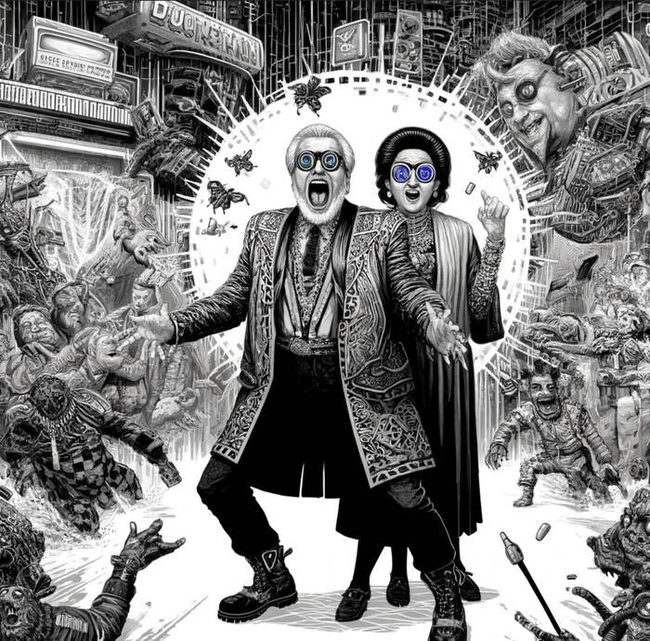
Figure 1: Illustration generated with Dall-E.3 (style A)
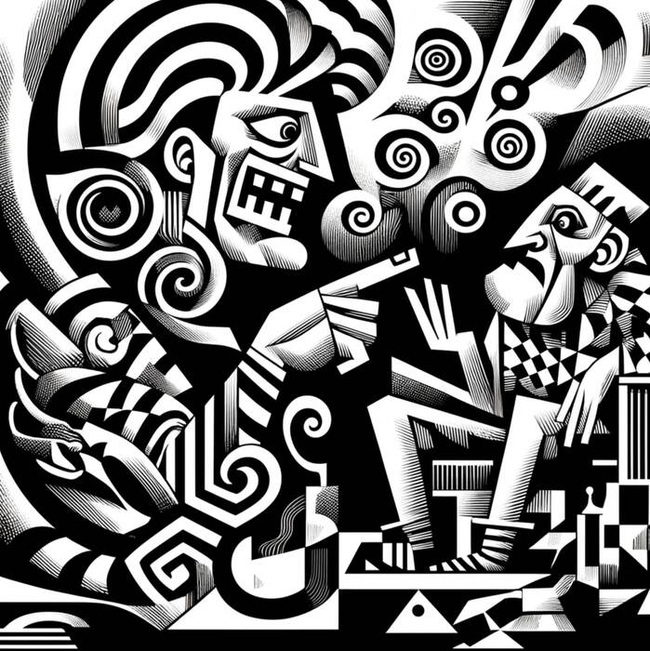
Figure 2: Illustration generated with Dall-E.3 (style B)
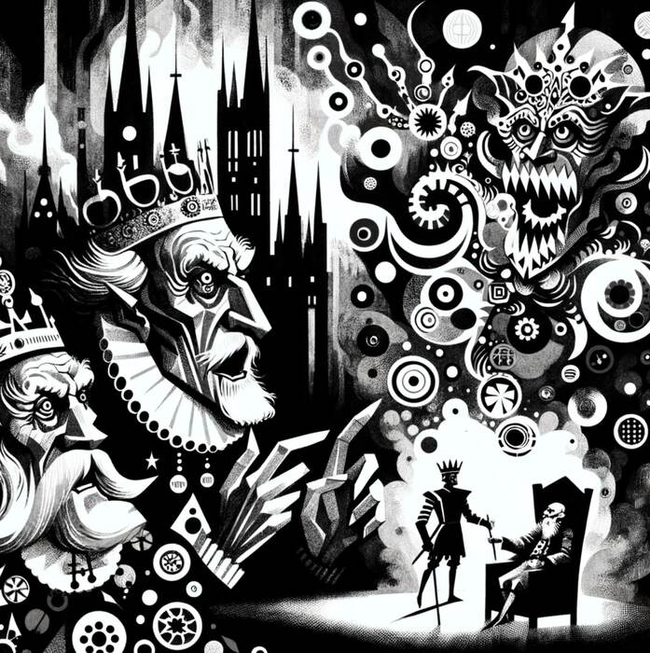
Figure 3: Illustration generated with Dall-E.3 (style C)
Additionally, a cover was generated for the printed book. Unlike the illustrations, it required minimal intervention by a graphic designer to add the appropriate textual information about the author of the original work, the prompt author, the publisher etc (Fig. 4).
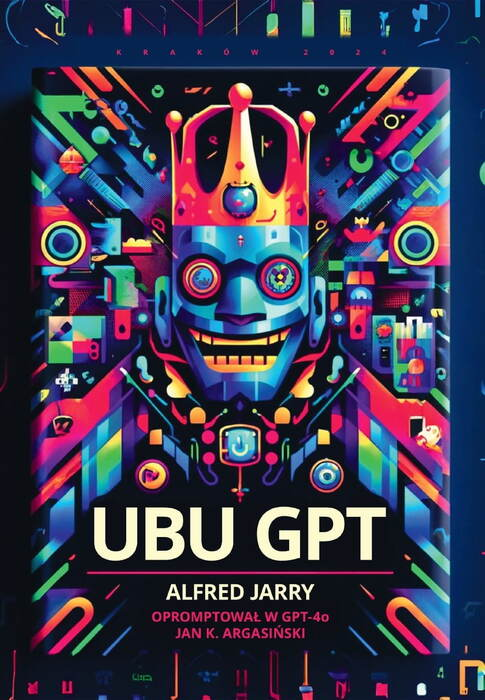
Figure 4: Book cover generated with Dall-E.3
2.6 Interview with the translator (that is - GPT)
As an introductory chapter to the book, a structured dialogue is presented in the form of an interview between the prompter, representing the author, and the ChatGPT-4o language model. This conversation examines the thematic content of the book, elucidating its historical context and the contributions of its original author, Alfred Jarry. The prompter inquires about Jarry's methodologies, the historical influence of his work, and the significance of his contributions to literature. The discourse extends to a technical discussion on the nature of language models, specifically addressing the operational mechanics of generative neural networks and their capacity for producing syntactically and semantically coherent text. The dialogue explores the concept of creativity in the context of artificial intelligence, scrutinizing the processes by which the model synthesizes information to produce outputs that approximate human linguistic expression. The conversation provides a concise overview of the Turing Test, a criterion proposed by Alan Turing to evaluate a machine's ability to perform indistinguishably from a human in linguistic tasks. The conclusion of the interview reveals that the entire exchange was a self-dialogue by the model, thereby engaging the reader in an implicit instance of the Turing Test, challenging the distinction between human and machine-generated communication [3, 10].
3 PUBLICATION
UBU GPT was intended as a book and it is a significant gesture. We did not want to distribute the project's output as a downloadable PDF file or as a post on social media. We also did not want to create a separate website for this project. We wanted to use the medium of the book as a meaningful, i.e. the most perfect tool for conveying content in the analog age. We want to emphasize that the analog was chosen as the medium for the final shape of this digital project. Hence UBU GPT was published and introduced into book distribution, as (probably) the first book in Poland (openly) created using GPT. The publisher made sure to use the services offered by AI as much as possible in the production process. Firstly, the text has not been subjected to traditional (human) editorial proofreading and editing. The book cover was generated in Dall-E 3, as were the illustrations for the book (see 2.5). Moreover, the facility looks traditional. The publisher published the book in a format and design similar to other publications. The book has an ISBN number assigned by the National Library, a barcode and a cover price. The book was professionally introduced to libraries, distributed and sent to literary critics. The reader can buy the book in bookstores or online stores. The book was also not published in a limited edition, but in such a way as to be able to satisfy distributors’ orders. The book was published in a publishing series open to experiments; 9 years earlier, in the same series, an automatic translation of King Jarry's UBU using Google Translate was published [6, 9].
4 FINAL REMARKS
Alfred Jarry's contributions, particularly through his seminal work Ubu Roi, hold substantial relevance in the context of modern avant-garde movements. Jarry's approach to literature and performance art, characterized by his use of absurdity, satire, and anarchic elements, catalyzed a shift in traditional narrative structures and thematic content, thereby prefiguring later developments in avant-garde art and literature. The recent publication of UBU GPT [7], which perpetuates Jarry's tradition of playful travesty, exemplifies contemporary explorations in the intersection of artificial intelligence and creative expression. By engaging in deliberate exercises in uncreativity and the ostensibly banal capabilities of modern AI technologies, this work underscores the significance of conceptual experimentation in the digital age. The work's subversion of normative expectations serves as a critical lens through which to evaluate the evolving role of AI in cultural production, emphasizing a methodological continuity with Jarry's legacy. The nuanced interplay between perceived silliness and profound conceptual innovation reflects a critical engagement with technological advancements, offering insights into their implications within modern cultural paradigms. Both the author and the publisher of UBU GPT are engaged in a reflective discourse on the reception and impact of such avant-garde methodologies, continuing a tradition of challenging the boundaries of artistic and technological domains.
REFERENCES
Sofian Audry. 2019. for the sleepers in that quiet earth. https://wrocenter.pl/pl/natalia-balska-pl-obelisk-beta/
Natalia Balska. 2016. Obelisk Beta. https://wrocenter.pl/pl/natalia-balska-pl-obelisk-beta/
Robert M French. 2000. The Turing Test: the first 50 years. Trends in cognitive sciences 4, 3 (2000), 115–122.
Kenneth Goldsmith. 2011. Uncreative writing: managing language in the digital age. Columbia University Press.
Alfred Jarry. 2005. Ubu Roi ou les Polonais. Project Gutenberg.
Alfred Jarry. 2015. Ubu Król. Kraków: Korporacja Ha! art.
Alfred Jarry. 2024. UBU GPT, tłumaczenie opromptował w GPT-4o Jan K. Argasiński. Kraków: Korporacja Ha! art.
David (Jhave) Johnston. 2019. ReRites. https://www.anteism.com/shop/rerites-david-jhave-johnston
Aleksandra Małecka and Piotr Marecki. 2018. Literary experiments with automatic translation: A case study of a creative experiment involving King Ubu and Google Translate. In On the Fringes of Literature and Digital Media Culture. Brill Rodopi, 77–88.
Ayse Pinar Saygin, Ilyas Cicekli, and Varol Akman. 2000. Turing test: 50 years later. Minds and machines 10, 4 (2000), 463–518.
Do you like what you are reading? Subscribe to receive updates.
Unsubscribe anytime